Software Engineering + HCI
SuitX
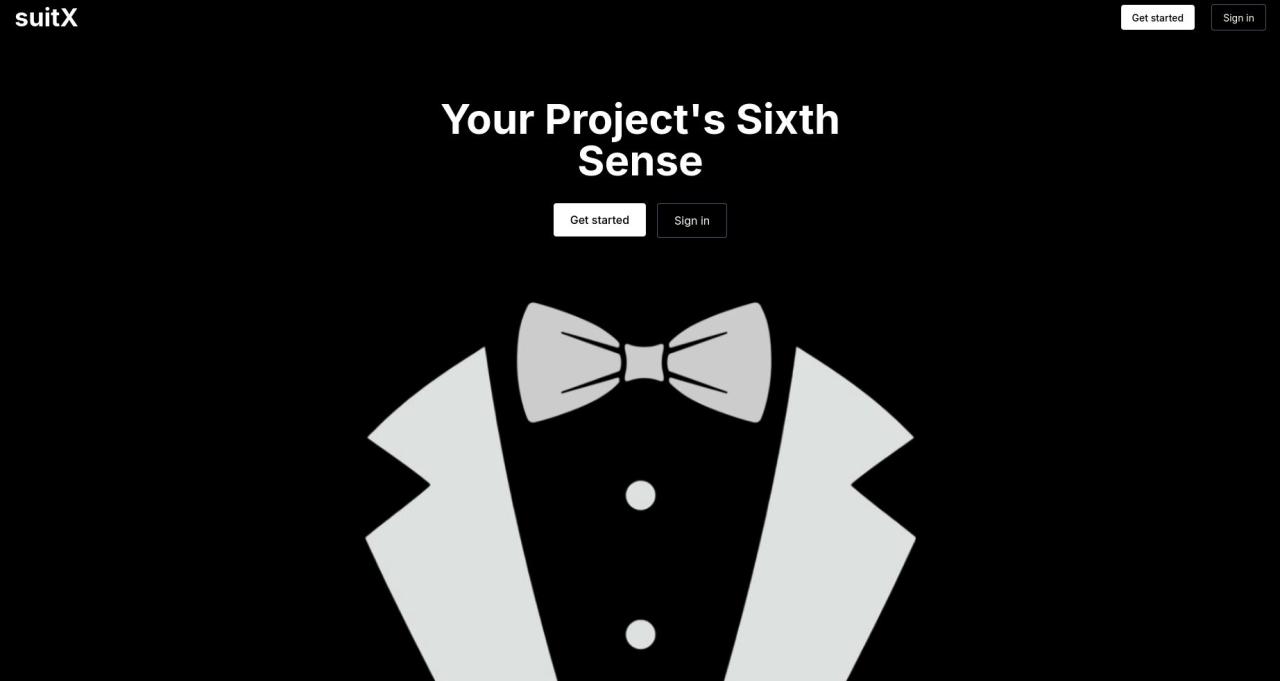
SuitX is a full-stack project risk management platform built to help teams identify emerging risks early, plan mitigation more clearly, and make better decisions with AI-generated insights.
Project overview
SuitX was built for a Software Engineering and Human-Computer Interaction course as a project risk management platform. The goal was to help teams surface risks early, track mitigation work in a more actionable way, and support project decision-making with structured AI-generated insights.
I served as team lead for a 4-person group, guiding the product direction, coordinating delivery, and keeping the technical and design work aligned throughout the project.
Problem addressed
Many project teams react to risks too late. By the time issues are visible, they have often already affected scope, schedule, or coordination. SuitX addresses that gap by organizing project work around projects, tasks, risks, mitigations, notifications, profiles, and invitations.
That structure keeps the platform scalable while separating UI concerns from business logic and data management.
AI risk analysis
One of the core features of SuitX is the AI risk analysis pipeline. The backend integrates the Gemini API to analyze real-time project updates and project context, then generate structured risk assessments and mitigation recommendations.
This turns the platform from a standard project tracker into a decision-support tool that can explain why a risk matters and suggest practical next steps for the team.
Technology and architecture
The system uses a React and Tailwind CSS frontend, a Spring Boot backend, and MongoDB for persistence. The frontend is deployed on Vercel, while the backend runs on Render, and the backend is containerized for deployment consistency.
We implemented JWT-based authentication and a modular REST API structure to keep the platform maintainable as the feature set grew.
HCI process
Because the project was also HCI-focused, usability was treated as a core requirement rather than an afterthought. The process included user research, personas, task flows, Figma prototyping, usability testing, and iterative refinement based on feedback.
That approach helped us build an interface that was functional, clear, team-friendly, and practical for real project workflows.
Delivery and outcome
The final delivery included JWT authentication, Dockerized backend deployment, and a modular REST API that supported the platform's core workflows. Over 4 sprints, SuitX was shaped by ongoing alignment between technical architecture, product usability, and delivery planning.
The result is a project risk management system that demonstrates both engineering depth and product thinking.