Graphics & Visualization + Intelligent Systems
Amor Fati
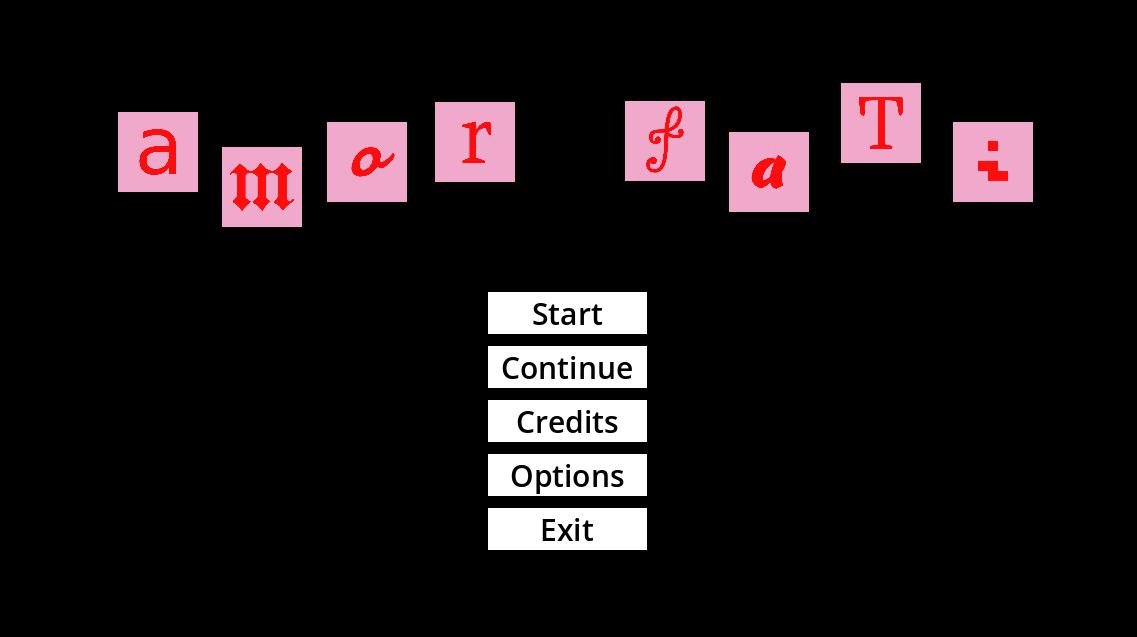
Amor Fati is a 3D survival and escape game developed in Godot 4 as a third-year project focused on technical AI systems, structured game architecture, and atmospheric narrative design.
Project overview
Amor Fati was developed as part of a third-year Graphics & Visualization and Intelligent Systems project. I led a four-person team through the full production process while also serving as the game’s writer and director, owning the narrative structure, gameplay direction, and overall creative vision.
My role bridged design leadership and technical implementation, keeping the experience cohesive from story concept through to playable systems.
Game architecture
The project was built around a modular, scene-based architecture in Godot, with separate systems for the player, enemies, level flow, navigation, audio, and saving.
That separation made the game easier to extend and helped keep the logic manageable as the survival loop and enemy behaviors became more complex.
Enemy AI and navigation
A graph-based waypoint system formed the backbone of enemy navigation. Level waypoints were scanned and converted into path nodes containing position data, terrain type, movement cost, and blocked-state information.
I implemented custom pathfinding using A* as the primary routing system, with BFS as a secondary search method where needed. Enemy behavior was driven by activation zones, line-of-sight checks, and path recalculation so enemies could switch between direct pursuit and graph-guided movement depending on the environment.
Gameplay systems
On the gameplay side, I worked on player movement, interaction handling, terrain-sensitive movement speeds, footstep audio variation, and level progression logic.
The player controller includes camera look, movement, gravity, jump handling, and raycast-based interaction with world objects. Supporting systems such as save management, sound triggers, and lighting helped tie the experience together into a polished survival loop.
Production and teamwork
The team worked across the full production pipeline, with Blender supporting the 3D assets and Godot handling scene composition, gameplay scripting, and runtime interaction. The project also supported progressive difficulty, so enemy pressure became more effective as the player moved through later levels.
We completed the work over 4 sprints, keeping narrative, mechanics, and implementation aligned throughout the process.
Outcome
Overall, Amor Fati combines technical AI systems, structured game architecture, and narrative design into a cohesive survival experience built for both gameplay clarity and atmospheric presentation.
It was a strong example of how design direction and systems engineering can reinforce each other in a game project.